A Trusted Designer's Review of Easily Distracted by Books
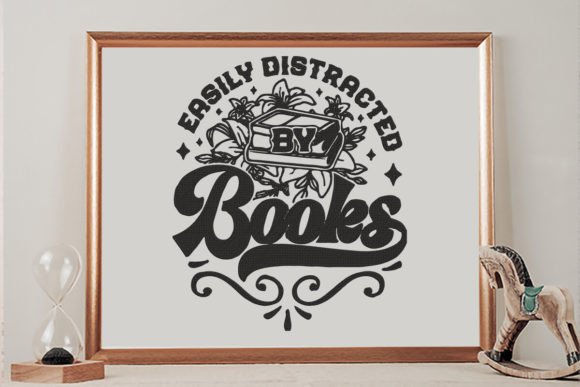
As someone who has spent years designing and selling at craft fairs, my first step with any new embroidery file is to imagine it on my booth table. When I look at Easily Distracted by Books, the immediate impression is a charming, bookish wit with a soft, modern feel. It's not overly rustic or starkly minimalist; it strikes a lovely balance between decorative and conversational. The title itself is a gentle, relatable joke that speaks directly to a specific audience—readers, educators, students, and bibliophiles. This isn't a festive or bold statement piece; it's a personality piece, which means it won't shout across a crowded market but will warmly engage someone who stops to look.
Where This Design Will Stand Out on Your Display Table
In a sea of handmade products, placement is key. Easily Distracted by Books has a particular strength: it’s a text-based design with a clear, simple message. At a glance, a customer understands it. This makes it perfect for items where the text is the main feature. Imagine a row of tote bags. A bold floral might catch the eye first, but a person browsing will pause at this design because it resonates. It works exceptionally well as a focal point on medium-sized items. I would not use it as a tiny accent on a cap’s side; it needs space to be read and appreciated.
For your craft fair booth, I recommend showcasing it on:
- Tote bags and market bags: The flat, spacious surface is ideal. It feels premium on a nice canvas.
- Pillow covers: Especially in a cozy, living-room display section. This elevates it from a simple phrase to a home decor item.
- Tea towels and aprons: Here, it leans into the "School" category feel—think teacher gifts or library volunteer gifts. It's cute and functional.
- Framed hoop art or small pouches: As a giftable handmade item, a small embroidered patch framed in a hoop or on a fabric pouch feels intentional and special.
Practical Production: Making It Look Professional
Versatility in description doesn’t always mean ease in execution. For Easily Distracted by Books, you must consider a few practical points before batch production.
First, this is a machine embroidery design with lettering. Always test on scrap fabric first. You need to check the stitch density, especially if the design has dense areas filling the book shapes. High density on towels or thin linens can cause puckering without the correct stabilizer. Second, review the spacing between letters and elements. Tiny, tight lettering can lose clarity on textured fabrics like terrycloth towels or on curved surfaces like caps. If you plan to put it on a cap, ensure the design size and curvature are compatible—small lettering on a curved cap surface often looks distorted.
Thread contrast is everything. This design likely pops best on lighter fabrics. If you want to embroider on dark fabric, like a navy tote bag, you must plan for very light thread (white, cream, pale yellow) to maintain readability. For your online listings, like Etsy shop product photos, high-contrast mockups photograph best. Create at least one real, physical mockup. A photo of a real embroidered pillow or tote bag shows handmade quality far better than a digital printable mockup alone.
Selling Points That Add Customer Value
For creative entrepreneurs, value is perceived through quality and relevance. Easily Distracted by Books adds value by feeling personal. It’s not a generic pattern; it’s a shared sentiment. This increases buyer engagement. A customer who loves books isn’t just buying a bag; they’re buying a badge of their identity. For your brand, if you cater to literary or academic niches, this design reinforces consistency.
From a production standpoint, if the design is clean and not overly complex, it can be quite repeatable for batch production. This is crucial for Etsy sellers and small shop owners preparing for a busy fair. You can efficiently run a series of tote bags with the same, well-understood design. However, always confirm the commercial licensing of the digital embroidery file before selling finished products. The description notes versatility, but the license terms are the legal foundation for your handmade business.
Careful-Use Notes for the Hands-On Maker
Let’s get into the nitty-gritty that separates a good booth sample from a flawed product.
- Small sizes: If you reduce this design for a small patch or pouch, test thoroughly. Shrinking text can make it illegible or cluttered. It may work best at its intended, likely medium, hoop size.
- Fabric texture: Avoid highly textured backgrounds for the first attempt. Smooth cotton, linen, or canvas are your safest bets for clarity.
- Stabilizer choice: For tote bags (often mid-weight), a cut-away stabilizer might give the cleanest result. For tea towels, a tear-away could suffice if the stitch density isn’t extreme. Your test on scrap will tell you.
- Hoop size: The product description doesn’t specify a hoop size. This is a critical detail you must check in the actual embroidery file before starting. Matching the design to the correct hoop ensures proper registration and prevents mis-stitches.
Finally, consider your booth display strength. A single "Easily Distracted by Books" tote bag among florals might get noticed. But a cohesive group—a pillow, a tote, and a framed piece together—creates a theme. It tells the customer you understand a niche, and that builds trust and perceived expertise. This design is a soft sell, a nod to a quiet passion. Place it where your booth has a moment of calm, and let it speak to the readers wandering through. It won’t be your fastest seller for everyone, but for the right customer, it will feel like a handmade gem they were meant to find.