A Craft Fair Designer Reviews Year Without Rain Font Embroidery
Let’s talk about turning a digital embroidery file into products that actually sell at a weekend market. When I’m preparing my booth, every design I choose has to pass a tough test: does it look good in person, is it practical to produce in batches, and will it catch a customer’s eye from across a busy aisle? Today, I’m reviewing the Year Without Rain Font Embroidery with that exact real-world lens.
First Impression: Where This Font Fits in a Handmade Market
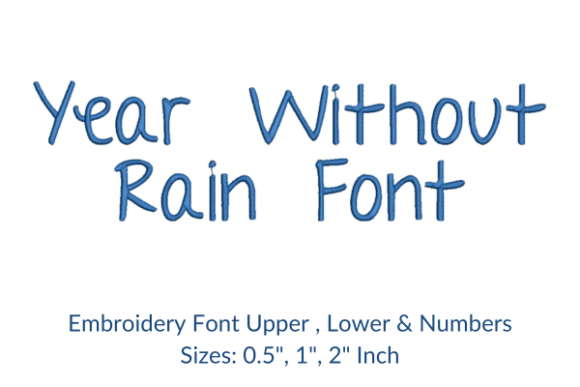
The name itself, Year Without Rain Font Embroidery, sets a specific mood. It doesn’t scream bold or festive. It feels softer, more evocative—perhaps a bit rustic or poetic. This isn’t a loud, novelty font; it’s a decorative tool for personalization. That tells me it’s aiming for a premium, thoughtful feel rather than a quick joke. For craft fair sellers targeting customers who value handmade quality and subtle charm, this is a good starting point. It feels suited for gifts, for items where a name, date, or short quote adds emotional value.
Putting Year Without Rain Font Embroidery on Real Products
My next step is always to imagine this design on the actual products I’ll be stitching for my booth. Here’s how I see it performing across a typical craft fair table.
Tote Bags and Market Bags
For a tote bag design, this font could be lovely. A single name or a short inspirational quote stitched neatly along a bottom corner or across the front would elevate a simple canvas bag. The key here is size—it needs to be large enough to be legible but not so dense that it becomes a slog to embroider on thicker bag fabric. It should feel like a custom, personal touch that increases the product’s value.
Aprons and Kitchen Towels
Apron embroidery and tea towel embroidery are classic sellers. Year Without Rain Font Embroidery could work beautifully for monogramming a chef’s apron or adding a family name to a towel set. On textured towel fabric, however, I’d be cautious. Small lettering or overly intricate details might get lost or look fuzzy. This font would need to be tested on scrap fabric first to ensure clarity.
Embroidered Patches and Caps
A patch is a small, focused product. If the font’ style has very fine lines, stitching it onto a patch at a small size might risk losing definition. On curved cap surfaces, similar challenges arise. For these applications, I’d likely use this font for larger text, like a surname across the back of a cap, ensuring the stitches can hold their shape on the curved surface.
Pillow Covers and Fabric Pouches
These are giftable handmade items where a decorative font shines. A pillow cover with “Home” or a date embroidered in Year Without Rain Font Embroidery could feel premium and cozy. For small pouches, a single initial or word would be a perfect accent. These products allow the font to be a focal point without overwhelming the item.
Booth Samples and Etsy Listings
How a design photographs is critical for online sellers. A clean, legible font like this should photograph well for Etsy listings and printable mockups. Creating at least one real, physical mockup is non-negotiable. I need to see how the thread colors contrast with different fabric colors—a white font on a light linen might vanish, while on dark fabric it could pop beautifully.
The Practical Production Checklist for Your Small Shop
Turning a digital embroidery file into a repeatable craft fair product requires a production mindset. Here are my direct notes from the designer’s table.
Stitch Density and Fabric Compatibility
Without knowing the exact stitch count, I must advise: test for stitch density. Dense stitch areas can pucker thinner fabrics like lightweight cotton for pouches, and they take longer to run, affecting batch production speed. Always use the right stabilizer for the fabric texture. A good test on scrap fabric will reveal if the design runs smoothly on everything from smooth quilting cotton to textured towels.
Hoop Size and Design Scaling
Check the recommended hoop size if it’s provided. Does Year Without Rain Font Embroidery work as a small accent on a baby bib, or does it need a larger hoop to maintain its character? This affects which products you can efficiently produce. Scaling down a font too much often blurs tiny details; scaling it up might increase production time. Find its sweet spot.
Batch Production and Commercial Use
For commercial embroidery, repeatability is key. If this font is clean and stitches reliably without frequent thread breaks or trimming, it’s a winner for batch work. Most importantly, confirm commercial licensing before selling finished products. The description says it’s for personalizing designs on any fabric, but for a small shop product sold at a fair or online, explicit commercial use rights are essential. Don’t assume.
Why This Font Could Strengthen Your Booth Display
Beyond the stitch itself, a design impacts your entire market presence.
Year Without Rain Font Embroidery offers consistency. If you create a series of products—tote bags, pillow covers, aprons—all monogrammed with the same font, it creates a cohesive brand look on your table. That consistency signals professionalism and handmade quality.
Its visual appeal is about subtle engagement. A customer browsing might be drawn to a beautifully embroidered name on a tea towel because it feels special and personal. It invites a story. That engagement is what turns a browser into a buyer.
Finally, it affects perceived product value. A generic bag is a bag. A bag with a carefully embroidered name in an attractive font becomes a personalized gift. That added value justifies a higher price point and helps your products stand out in a crowded handmade market.
A Final Designer’s Reminder Before You Hoop Your Fabric
My process is always the same: review spacing by stitching a test line of text. Inspect the stitch density on my test scrap. Compare how it looks on light and dark fabric swatches. And only then, do I commit it to my production schedule for craft fair products. Year Without Rain Font Embroidery, with its promise of personalization, has the potential to be a versatile asset in your embroidery business. But its real success will be determined not by the digital file alone, but by how thoughtfully you apply it to the fabrics and products your customers love to hold in their hands.