Fantasy Pixel Font: A Craft Fair Designer's Review
As an embroidery designer preparing for a weekend craft fair, every new design file is a potential product, a possible standout on the booth table. Today, I’m looking at the Fantasy Pixel Font, a machine embroidery design intended for personalization, and judging it purely from a maker’s perspective: will it sell, look good in person, and be practical to produce?
First Impression: Bold, Modern & Playfully Nostalgic
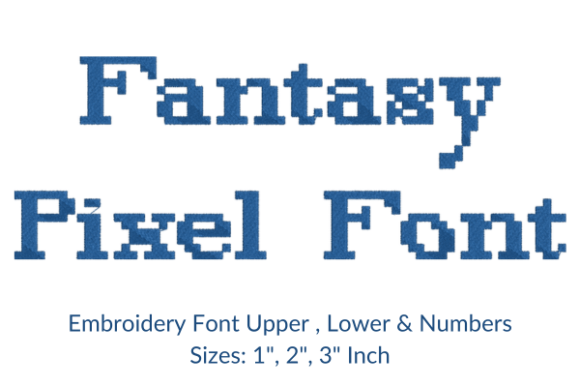
The name Fantasy Pixel Font immediately conjures a specific vibe. This isn't a soft, script font or a rustic farmhouse style. It feels bold, modern, and digitally nostalgic—like a clever bridge between classic craft and contemporary graphic design. For a product categorized under School, that makes perfect sense; it has that clean, structured, yet playful character perfect for names, dates, and short quotes. It reads as premium and intentional, not overly cute or minimal. In a sea of handmade items, a font with this distinct personality can immediately catch a customer’s eye.
Performance on Key Craft Fair Products
My booth will feature a range of items: tote bags, aprons, tea towels, caps, patches, small pouches, pillow covers, and various giftable handmade products. Where does Fantasy Pixel Font shine?
Tote Bags & Market Bags: This is a prime canvas. The bold, pixelated letters would look fantastic as a focal name or quote on a solid-color bag. It provides graphic impact without being overly decorative, appealing to a wide audience. It feels especially suitable for a modern, personalized gift.
Aprons & Kitchen Towels: For aprons, a name or a short funny phrase using Fantasy Pixel Font could be a great seller. On textured towels, the font’s clean lines need careful consideration for stitch density and stabilizer choice to ensure clarity, but the result would be striking and highly customizable.
Caps & Patches: This is where careful evaluation is crucial. The curved surface of a cap and the smaller size of a patch demand a design that remains legible when scaled down. Fantasy Pixel Font, with its pixel-based construction, might risk losing some clarity at very small sizes. A test on scrap fabric is essential here.
Pouches & Pillow Covers: As an accent on a pouch or a central monogram on a pillow, this font elevates the item. It feels deliberate and designer-led, increasing perceived value. It works beautifully as both a small accent and a larger focal point, depending on the product’s scale.
Practical Selling & Production Points
From a production standpoint, a font file like this is about repeatability and batch production for a craft fair.
Ease of Understanding: At a glance, customers will instantly recognize it as a name, date, or quote. This quick readability is vital for fast-paced fair sales. It doesn’t require explanation; the product speaks for itself.
Photography for Online Listings: For Etsy sellers and digital sellers using printable mockups, this font will photograph well. The clean edges and bold form create contrast and clarity in listing images, which is half the battle in online sales.
Repeatability for Batch Production: Once tested and optimized, personalizing multiple items with the same font is efficient. It supports brand consistency across a small shop product line—all your personalized items carry the same distinctive, quality handwriting.
Critical Use Notes for the Embroidery Designer
Before stitching this onto any craft fair product, a professional review is non-negotiable.
- Test on Scrap Fabric: Always stitch out Fantasy Pixel Font on the actual fabric you plan to use—a textured towel, a dense canvas tote, a curved cap fabric. This reveals any issues with pull or distortion.
- Check Thread Contrast: On dark fabrics, a bold font needs bright, high-contrast thread. On light fabrics, consider using a dark thread for that sharp, pixelated effect.
- Review Spacing & Density: Examine the stitch density in the design file. Very dense stitch areas on thicker fabrics like canvas might require specific stabilizer strategies.
- Confirm Hoop Size & Scaling: The design's intended hoop size matters. Scaling it down for a patch might compromise the pixel detail. Scaling it up for a pillow cover should work beautifully.
- Create a Real Mockup: Before producing a batch, make at least one finished product. See how Fantasy Pixel Font looks and feels on a real tote bag or apron in your display. This is your ultimate quality check.
- Compare Fabric Colors: Test the font on a range of your standard fabric colors. Some color combinations will pop more on the sales table.
- Confirm Commercial Licensing: As a commercial embroidery business, always verify that your digital embroidery file license permits use on finished products for sale. This is a fundamental step.
Impact on Customer Attention & Product Value
At the craft fair booth, visual appeal is everything. Fantasy Pixel Font, by its nature, creates a point of focus. On a display table, a tea towel with a name embroidered in this font looks more like a bespoke gift than a generic item. It elevates the handmade quality and justifies a premium price point.
It encourages buyer engagement—customers see it and immediately think, “That could be my name,” or “That would be perfect for my daughter.” This personal connection is a direct path to a sale. For boutique makers and creative entrepreneurs, a strong, recognizable design asset like this strengthens your entire booth display, creating a cohesive and professional look.
In the end, Fantasy Pixel Font presents a compelling opportunity for craft fair sellers and embroidery business owners. Its modern, bold character stands out in a physical market environment. With diligent pre-production testing—especially regarding small-scale applications and fabric compatibility—it can become a reliable, high-value part of your handmade product lineup. It turns simple personalization into a distinctive design statement, which is exactly what customers at a handmade market are looking for.